

Dental Implant vs. Bridge: Which Is Better for Replacing a Missing Tooth?
Dr. Zack Youngblood
Missing a Tooth? You Have More Than One Option
If you're missing a tooth, two of the most common ways to replace it are a dental implant or a dental bridge. Both can restore your smile, improve function, and fill the space left behind by a missing tooth, but they accomplish that in very different ways.
At MDRN MUSE Dental Aesthetics in Chattanooga, TN, we look at more than just filling the empty space. We also consider the health of the surrounding teeth, available bone, your bite, aesthetics, and which option makes the most sense for your smile long-term.
So, what's the difference between a dental implant and a bridge, and how do you know which one is right for you? Let's break it down.
What Is a Dental Implant?
A dental implant is designed to replace a missing tooth from the root up. A small titanium implant is placed into the jawbone where the natural tooth root used to be. After the implant has integrated with the surrounding bone, an abutment and custom dental crown are attached to create the final tooth.
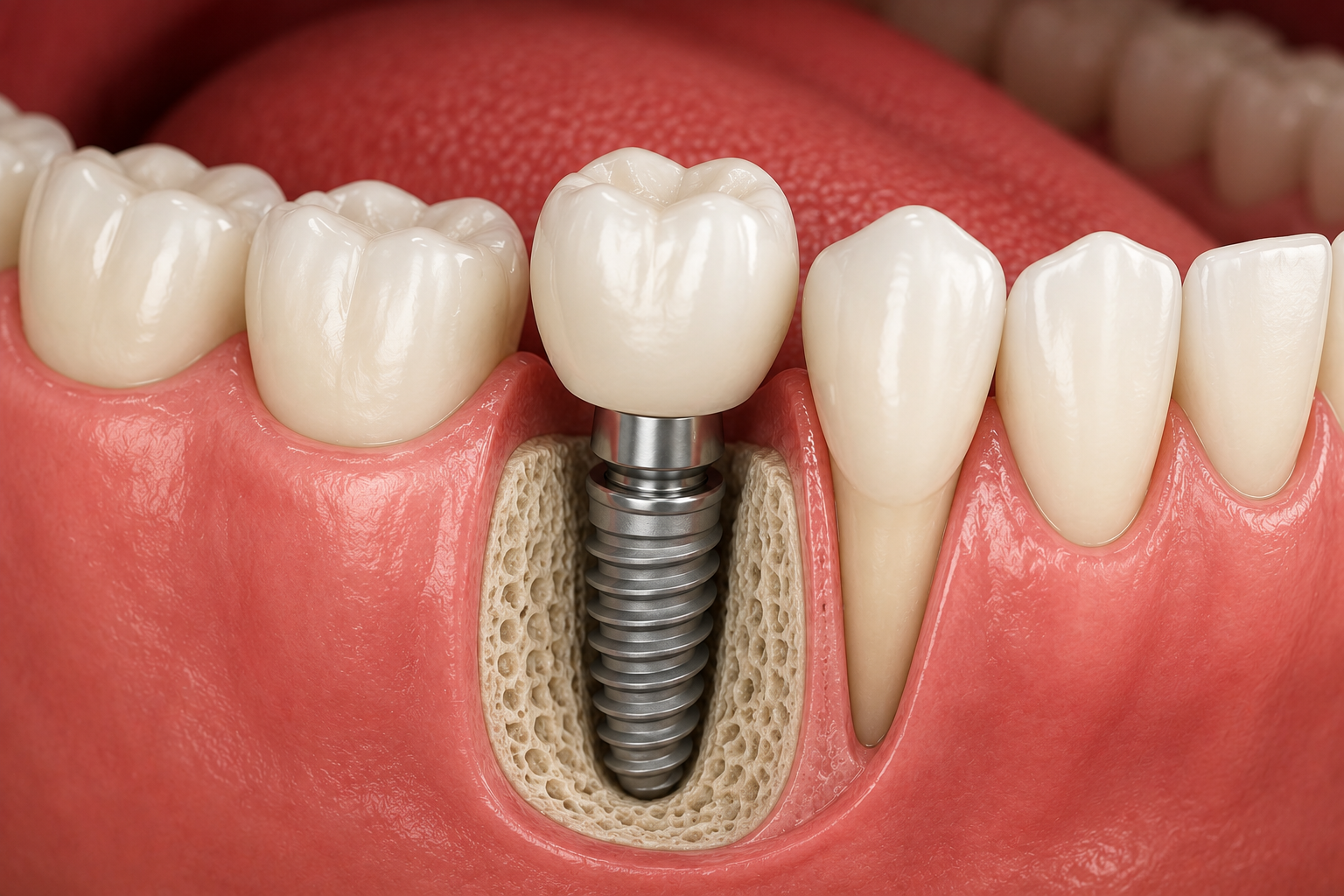
One of the biggest advantages of a dental implant is that it stands independently. We typically don't have to reshape or rely on the neighboring teeth to support it.
Because an implant replaces the missing tooth root, it also transfers forces into the jawbone when you chew, which can help maintain the bone in that area.
What Is a Dental Bridge?
A traditional dental bridge replaces a missing tooth by using the teeth on either side of the space for support.
Those neighboring teeth are prepared for crowns, and the replacement tooth, called a pontic, is connected between them. The result is one restoration that literally "bridges" the space where the tooth is missing.
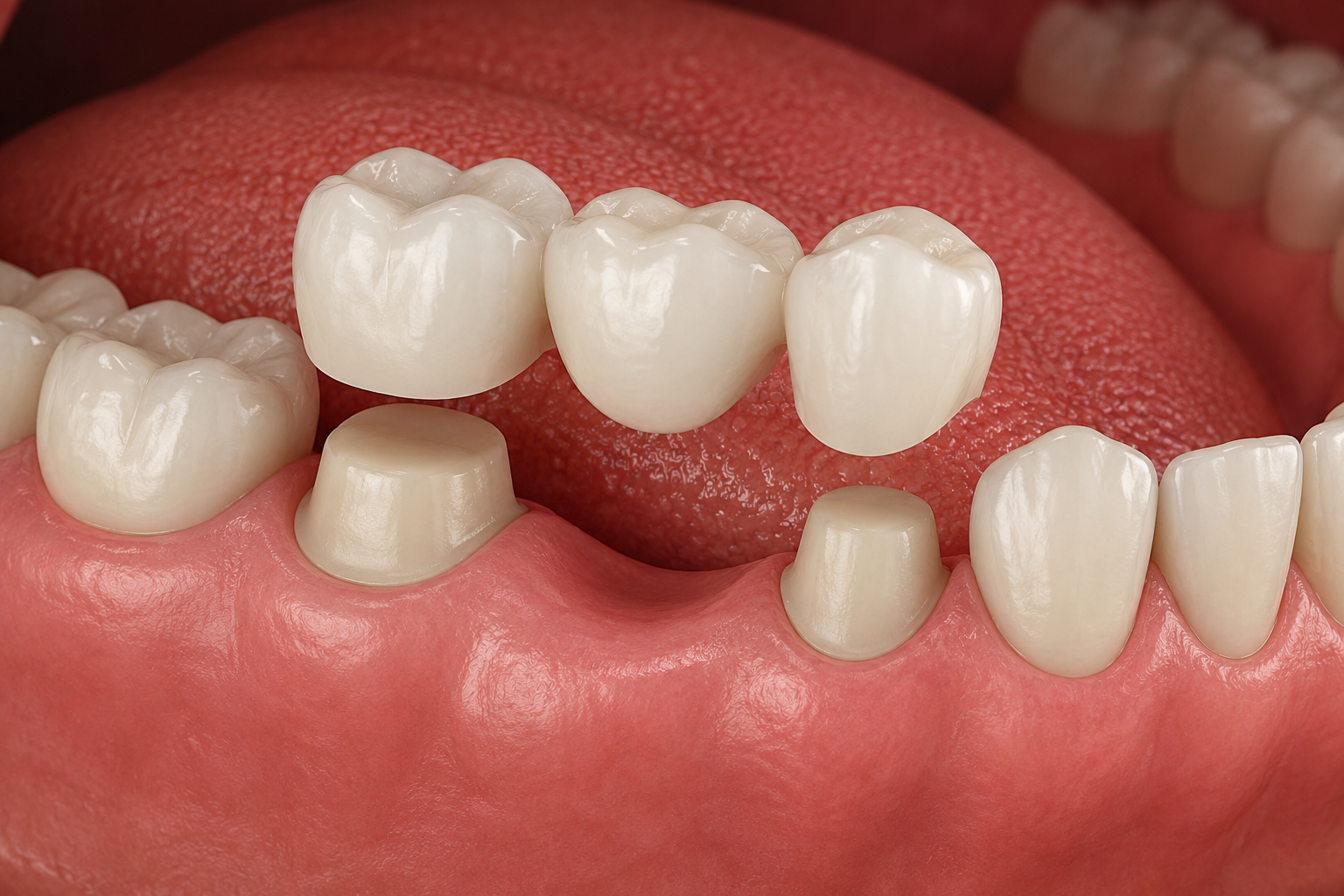
A bridge can be a great treatment option and generally does not require implant surgery. However, unlike an implant, a traditional bridge usually requires us to remove some tooth structure from the neighboring teeth so they can support the restoration.
Dental Implant vs. Bridge: What's the Difference?
Both treatments can successfully replace a missing tooth, but there are several important differences to consider.
A dental implant replaces the missing tooth independently, while a traditional bridge relies on neighboring teeth for support. An implant also replaces the tooth root, while a bridge primarily replaces the visible portion of the missing tooth above the gumline.
Treatment time can also be different. A bridge can often be completed more quickly because there is no waiting period for an implant to integrate with the bone. Dental implants typically require a longer process, especially if an extraction, bone graft, or additional healing is needed first.
Cleaning is another consideration. An implant crown can usually be brushed and flossed similarly to a natural tooth. A bridge requires special attention underneath the replacement tooth because the connected crowns prevent traditional floss from passing directly between them.
When Is a Dental Implant the Better Choice?
If the teeth on either side of the missing tooth are healthy, a dental implant is often an excellent option.
Why? Because we can replace the missing tooth without unnecessarily preparing healthy neighboring teeth for crowns.
Preserving healthy natural tooth structure is something we take seriously. If we can replace one missing tooth without altering two otherwise healthy teeth, there can be a significant long-term advantage to doing so.
Dental implants can also be incredibly strong and long-lasting when they are properly planned, placed, restored, and maintained.
That doesn't mean every person with a missing tooth automatically needs an implant. Your bone levels, gum health, medical history, bite, location of the missing tooth, and several other factors need to be evaluated first.
When Might a Dental Bridge Be the Better Choice?
Dental implants aren't always the best option for every patient.
For example, if the teeth beside the missing tooth already have large restorations or need crowns anyway, incorporating them into a bridge may make sense. In that situation, we're not necessarily preparing completely untouched teeth solely to replace the missing one.
A bridge may also be considered when implant surgery isn't appropriate, when there isn't enough bone for predictable implant placement without additional procedures, or when a patient prefers a treatment option that can potentially be completed more quickly.
This is why we don't believe there should be one automatic answer for every missing tooth. The condition of the entire area matters.
Which Lasts Longer: a Dental Implant or a Bridge?
Both dental implants and bridges can last for many years with good oral hygiene, routine dental care, and proper maintenance.
Dental implants have the advantage of being independent of the neighboring teeth. The implant itself can potentially remain in place for decades, although the crown attached to it may eventually need maintenance or replacement over time.
A bridge can also be very long-lasting, but its success depends partly on the health of the teeth supporting it. If one of those supporting teeth develops decay, fractures, or experiences another problem, it can affect the entire bridge.
No dental restoration should be considered completely maintenance-free or guaranteed for life. Your oral hygiene, bite, diet, habits, and regular dental care all play a role in how long either option lasts.
Which Costs More: a Dental Implant or a Bridge?
The cost of replacing a missing tooth depends on the specific treatment needed.
A dental implant may involve several components, including implant placement, an abutment, and the final crown. Some patients may also need an extraction or bone graft before the implant can be placed.
A bridge typically involves multiple connected crowns, so its cost depends on the number of teeth involved and the materials being used.
Dental insurance benefits can also vary significantly between the two treatments.
Instead of looking only at the initial price, we encourage patients to consider the health of the surrounding teeth, expected longevity, maintenance, and what additional treatment could potentially be needed in the future.
Do Dental Implants Look More Natural Than Bridges?
Both options can look incredibly natural when they are planned and designed properly.
Especially when replacing a tooth that shows in your smile, the final result isn't just about filling a space. We consider the shape, shade, proportions, gumline, and how the new tooth relates to the teeth around it.
A well-designed implant crown or bridge shouldn't immediately look like a "fake tooth." The goal is for the restoration to blend naturally into your smile.
For highly visible teeth, careful treatment planning becomes even more important because small differences in tooth shape or gum position can have a significant impact on the final appearance.
So, Would I Choose a Dental Implant or a Bridge?
If I were replacing a single missing tooth surrounded by healthy teeth, and I were a good candidate for implant treatment, I would generally lean toward a dental implant.
The biggest reason is simple: it allows us to replace the tooth that's missing without unnecessarily removing healthy tooth structure from the teeth beside it.
But that's not the right answer for every situation.
If the neighboring teeth already need significant restorative treatment, if implant placement isn't predictable, or if other clinical factors make a bridge the better option, I wouldn't recommend an implant simply because implants are popular.
Good dentistry isn't about choosing the newest or most expensive treatment. It's about choosing the treatment that makes the most sense for your specific mouth.
What Happens If You Don't Replace a Missing Tooth?
Depending on where the tooth is located, leaving a space untreated can sometimes create additional problems over time.
Teeth beside the space may begin to shift or tilt. The opposing tooth can also move into the empty space, and changes in tooth position can affect your bite and make the area more difficult to clean.
Bone in the area can also change after a tooth is lost because the natural tooth root is no longer present to stimulate it.
Not every missing tooth needs to be replaced in exactly the same way, but it's worth having the area evaluated so you understand what could happen if you choose to leave the space alone.
Dental Implants and Bridges in Chattanooga, TN
If you're missing a tooth and trying to decide between a dental implant and a bridge, you don't have to make that decision on your own.
At MDRN MUSE Dental Aesthetics in Chattanooga, we evaluate the missing tooth, neighboring teeth, bone, gum health, bite, aesthetics, and your long-term goals before recommending a treatment.
Sometimes that means a dental implant. Sometimes a bridge makes more sense. Our goal is to find the option that restores your smile while preserving as much healthy tooth structure as possible.
If you're ready to find out which option is right for your smile, schedule a New Patient Experience with MDRN MUSE Dental Aesthetics in Chattanooga, TN. We'll evaluate the area, discuss your options, and create a treatment plan designed specifically for you.
Frequently Asked Questions About Dental Implants vs. Bridges
Is a dental implant better than a bridge?
There isn't one option that's better for every patient. If the teeth beside the missing tooth are healthy and you have adequate bone for an implant, a dental implant is often a great choice because it can replace the missing tooth without requiring us to prepare the neighboring teeth. However, a dental bridge may make more sense in certain situations, especially if the neighboring teeth already need crowns.
How long does a dental implant last compared to a bridge?
Both dental implants and bridges can last for many years with proper care. The implant itself can potentially remain in place for decades, although the crown attached to it may eventually need replacement. The lifespan of a bridge depends partly on the health of the teeth supporting it, along with your oral hygiene, bite, and other factors.
Is it cheaper to get a bridge or a dental implant?
The cost depends on your individual treatment plan. Dental implant treatment can include implant placement, an abutment, and a crown, while a bridge typically involves multiple connected crowns. Additional procedures such as an extraction or bone graft can also affect implant costs. Dental insurance coverage varies, so it's important to compare the complete treatment plans rather than just one procedure.
Does getting a dental implant hurt?
Dental implant placement is performed using local anesthesia to keep you comfortable during the procedure. It's normal to experience some soreness, swelling, or tenderness afterward, but the amount of discomfort varies from person to person. Your dentist will review what to expect and provide specific instructions for managing the healing period.
How long does it take to replace a tooth with a dental implant?
The timeline varies depending on your individual situation. After an implant is placed, it generally needs time to integrate with the surrounding bone before the final crown is attached. If you need an extraction, bone graft, or additional healing beforehand, the overall process may take longer. Your dentist can provide a more specific timeline after evaluating the area.
Can you get a dental implant years after losing a tooth?
Yes, many patients can receive a dental implant years after a tooth has been lost. However, the bone in the area can change over time, so your dentist will need to evaluate how much bone is available for implant placement. In some cases, bone grafting may be recommended before or during implant treatment.
Can a dental bridge be replaced with an implant later?
In many cases, yes. If an existing bridge needs to be replaced, dental implants may be considered as an alternative depending on the health of the supporting teeth, available bone, gum health, and other clinical factors. An examination and imaging are necessary to determine whether implant treatment is appropriate.
How do I know whether I need a dental implant or a bridge?
The best way to decide is through a comprehensive dental evaluation. Your dentist will consider the health of the teeth surrounding the space, available bone, gum health, bite, medical history, aesthetics, and your long-term goals. At MDRN MUSE Dental Aesthetics in Chattanooga, TN, we evaluate these factors before recommending the tooth replacement option that makes the most sense for you.
